
You can have the most beautiful website in the world, but if nobody can find it, it might as well not exist. Search engine optimization — SEO — is the difference between a website that generates business and one that sits in a dark corner of the internet collecting dust. The good news is that you do not need to be a technical expert to understand the fundamentals. Here are the SEO basics every business owner should know before launching a website.
Title Tags and Meta Descriptions: Your First Impression on Google
When someone searches on Google, the first thing they see is your title tag and meta description. These are the headline and short summary that appear in search results. Think of them as your storefront sign and window display — they determine whether someone clicks on your result or scrolls past it.
Every page on your website needs a unique, descriptive title tag (ideally 50-60 characters) and a compelling meta description (150-160 characters). The title should clearly communicate what the page is about and include the primary keyword naturally. The meta description should give users a reason to click — a brief preview of the value they will find on your page.
If your website does not have custom title tags and meta descriptions for every page, Google will generate them automatically — and the results are almost never as effective as ones written by a human who understands your business.

Heading Hierarchy: Structure That Search Engines Understand
Search engines read your website like a document outline. Headings — H1 through H6 — tell Google what your content is about and how it is organized. Every page should have exactly one H1 tag (your main page title), followed by H2 tags for major sections, and H3 tags for subsections within those.
This is not just a technical requirement — it directly impacts how well Google understands your content. A page about 'Plumbing Services in Vienna' with a clear H1, followed by H2 sections for 'Emergency Repairs,' 'Bathroom Renovations,' and 'Commercial Plumbing' tells Google exactly what services you offer and where. That clarity translates to better rankings for those specific search terms.
Many template websites use headings for visual styling rather than structure — making something an H2 just because it looks big and bold. This confuses search engines and weakens your SEO.
Image Alt Text: The SEO Asset Most People Ignore
Every image on your website should have descriptive alt text — a short text description of what the image shows. This serves two purposes: it makes your site accessible to visually impaired users who rely on screen readers, and it gives Google another signal about your page content.
Good alt text is descriptive and natural: 'Team of plumbers installing bathroom fixtures in a modern apartment' rather than 'IMG_4523' or just 'plumber.' It is a small detail that adds up across your entire site, especially for local businesses that want to appear in image search results.
Page Speed: A Ranking Factor You Cannot Afford to Ignore
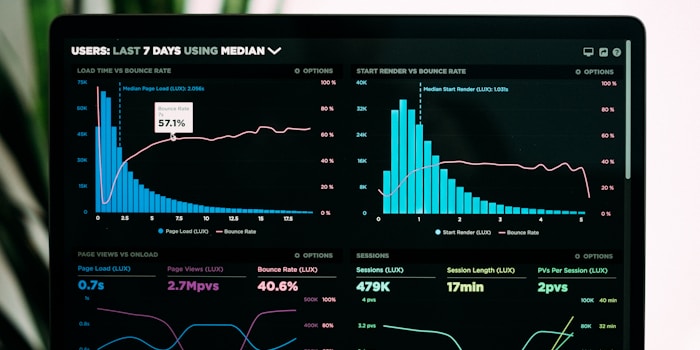
Google has confirmed that page speed is a ranking factor for both desktop and mobile search results. Slow websites not only frustrate users — they actively rank lower. The biggest speed killers are unoptimized images, too many plugins, cheap hosting, and render-blocking scripts.
Your website should load in under 3 seconds on a mobile connection. Ideally under 2. You can check your current speed for free using Google PageSpeed Insights. If your score is below 90, there is room for improvement that will directly impact your search rankings.
Mobile-Friendliness: Google's Top Priority
Since Google switched to mobile-first indexing, the mobile version of your website is the version that matters most for SEO. If your site is not fully responsive — meaning it adapts seamlessly to phones, tablets, and desktops — you are at a significant disadvantage in search rankings.
Mobile-friendliness goes beyond just fitting on a small screen. It means readable text without zooming, buttons large enough to tap accurately, no horizontal scrolling, and content that loads quickly even on slower mobile connections.
Structured Data: Speaking Google's Language
Structured data is a way of marking up your website's content so that search engines can understand it more precisely. Using a format called JSON-LD, you can tell Google that a page contains a business listing, a product, a review, an event, or an FAQ — among many other types.
When Google understands your content through structured data, it can display rich results — enhanced search listings with star ratings, prices, business hours, FAQ dropdowns, and more. These rich results take up more visual space in search results and significantly increase click-through rates.
For local businesses, structured data is especially powerful. A LocalBusiness schema can tell Google your exact address, phone number, business hours, and service area — making it much easier to appear in local search results and Google Maps.
Local SEO: Owning Your Geographic Market
If your business serves a specific geographic area, local SEO should be your top priority. This means:
- Claiming and optimizing your Google Business Profile with accurate information, photos, and regular posts
- Ensuring your business name, address, and phone number are consistent everywhere online
- Including location-specific keywords naturally in your content, titles, and meta descriptions
- Building local citations in relevant directories
- Encouraging and responding to customer reviews on Google
Local SEO is often the fastest path to results for small and medium businesses. Ranking in the local map pack for 'dentist near me' or 'electrician in [your city]' can bring in a steady stream of high-intent customers who are ready to buy.
SEO is not a one-time task — it is an ongoing practice. But getting the foundations right from the start gives you a massive head start over competitors who treat it as an afterthought.
Start With the Foundation
You do not need to become an SEO expert, but you do need to make sure your website is built with these fundamentals in place. A beautiful website that Google cannot properly index is a missed opportunity. A well-optimized website that ranks for the right keywords is a machine that generates leads while you sleep.
If you are planning a new website or suspect your current one is not working hard enough for you in search results, let us talk about building a site that looks great and ranks even better.